Starlink helped rescue people stranded in snowy Kazakhstan mountains
Satellite internet system Starlink helped rescue five people trapped in the snowy mountains of Kazakhstan by transmitting a distress signal.
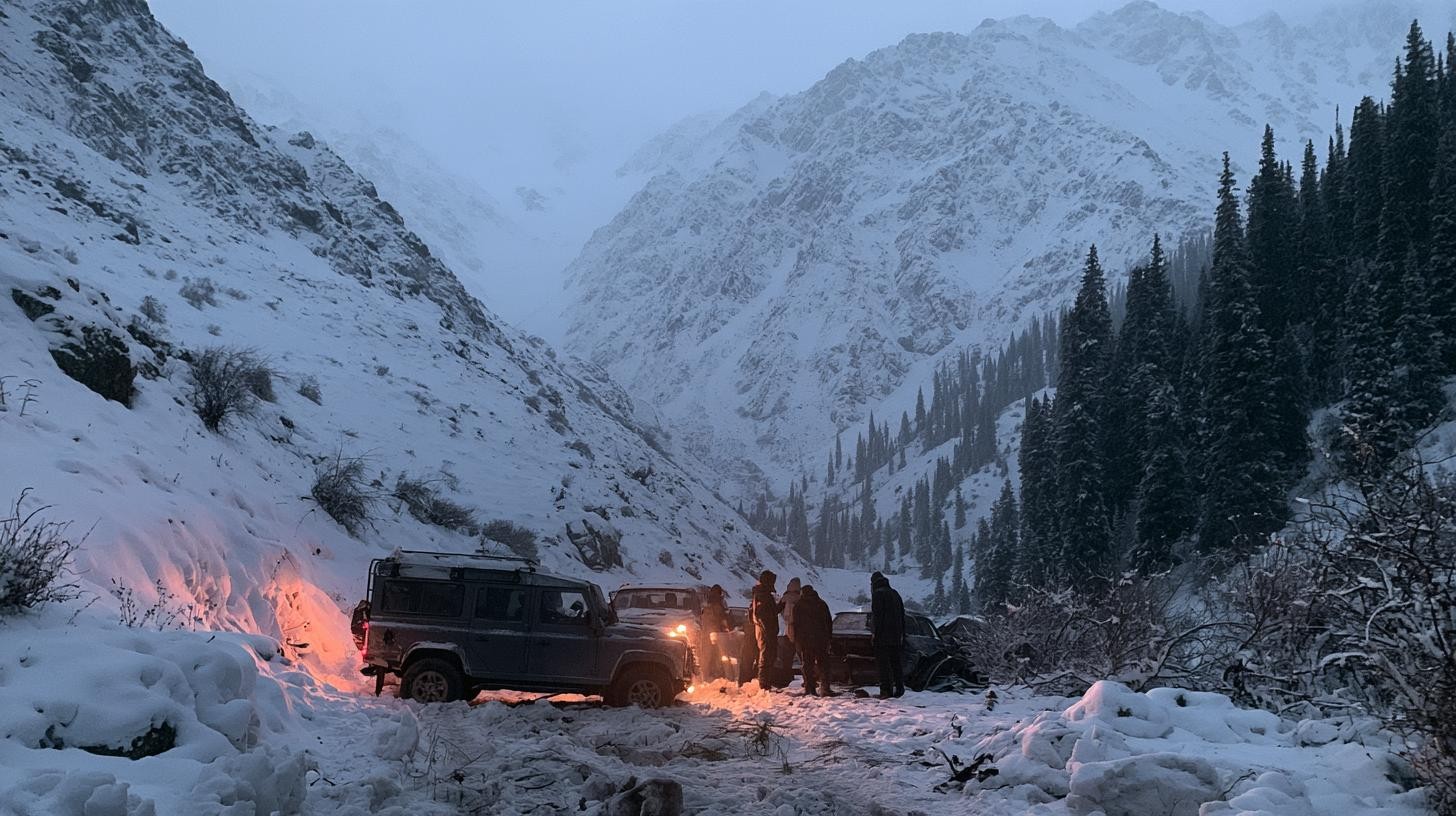
In the snowy mountains of Kazakhstan, modern technology played a crucial role in saving human lives during an emergency situation. Five people became stranded far from civilization after their vehicle broke down in severe winter weather conditions. Thanks to satellite communication, they managed to transmit their coordinates and request assistance.
- An SUV carrying five people broke down about 15 km from the village of Kystau-Kurchum.
- There was a complete lack of mobile network coverage in the mountainous incident area.
- Starlink satellite internet allowed the victims to transmit a distress signal and stay in touch.
- Rescuers traveled about 100 km on an all-terrain vehicle to successfully evacuate everyone.
Details of the emergency in the mountains of Kazakhstan
The incident occurred in a remote mountainous area when a group of five travelers experienced a vehicle breakdown. Located approximately 15 kilometers from the village of Kystau-Kurchum, the car could no longer move due to technical failure. The situation was further aggravated by heavy snowdrifts and freezing winter temperatures.
The main challenge was the complete absence of traditional telecommunication infrastructure in the region. The travelers' mobile phones had no signal, making it impossible to make a standard emergency call. Under such conditions, the group risked being completely cut off from the outside world without prompt intervention.
Read alsoSpaceX successfully catches orbital Starship spacecraft with mechanical armsThe role of Starlink satellite communication in the rescue operation
The Starlink satellite internet system came to the rescue of the stranded individuals. Despite the absence of cellular base stations, the terminal enabled a stable connection. The victims were able to send a message detailing their critical situation and request urgent evacuation.
The information received through the satellite network enabled emergency services to precisely determine the group's location. This proved to be a decisive factor for the successful planning of the search operation, as every minute counts in mountain rescue missions.
Execution and results of the rescue operation
To reach the stranded vehicle in the snow-covered area, rescuers had to deploy specialized heavy-duty transport. They had to travel approximately 100 kilometers across rugged and snow-blocked terrain using an all-terrain vehicle to reach the specified coordinates.
As a result of coordinated rescue efforts and timely communication, all five people were found and safely brought back to the village of Kystau-Kurchum. None of the participants suffered serious harm, highlighting the vital importance of access to modern communication tools in extreme environments.
The significance of satellite technology for remote regions
This incident in Kazakhstan once again clearly demonstrated the immense potential of satellite internet in areas where terrestrial communication infrastructure is entirely absent. Mountainous and hard-to-reach territories frequently pose serious hazards to travelers and locals alike.
The development of global satellite coverage technologies like Starlink is transforming travel safety standards. The ability to send an emergency message from anywhere on the planet saves human lives where conventional smartphones are rendered useless by natural elements and lack of towers.
Source: iXBT.com