Voyager 1 spacecraft to reach historic one light-day distance
NASA's Voyager 1 spacecraft is set to reach a historic distance of one light-day from Earth after nearly 50 years of continuous flight.
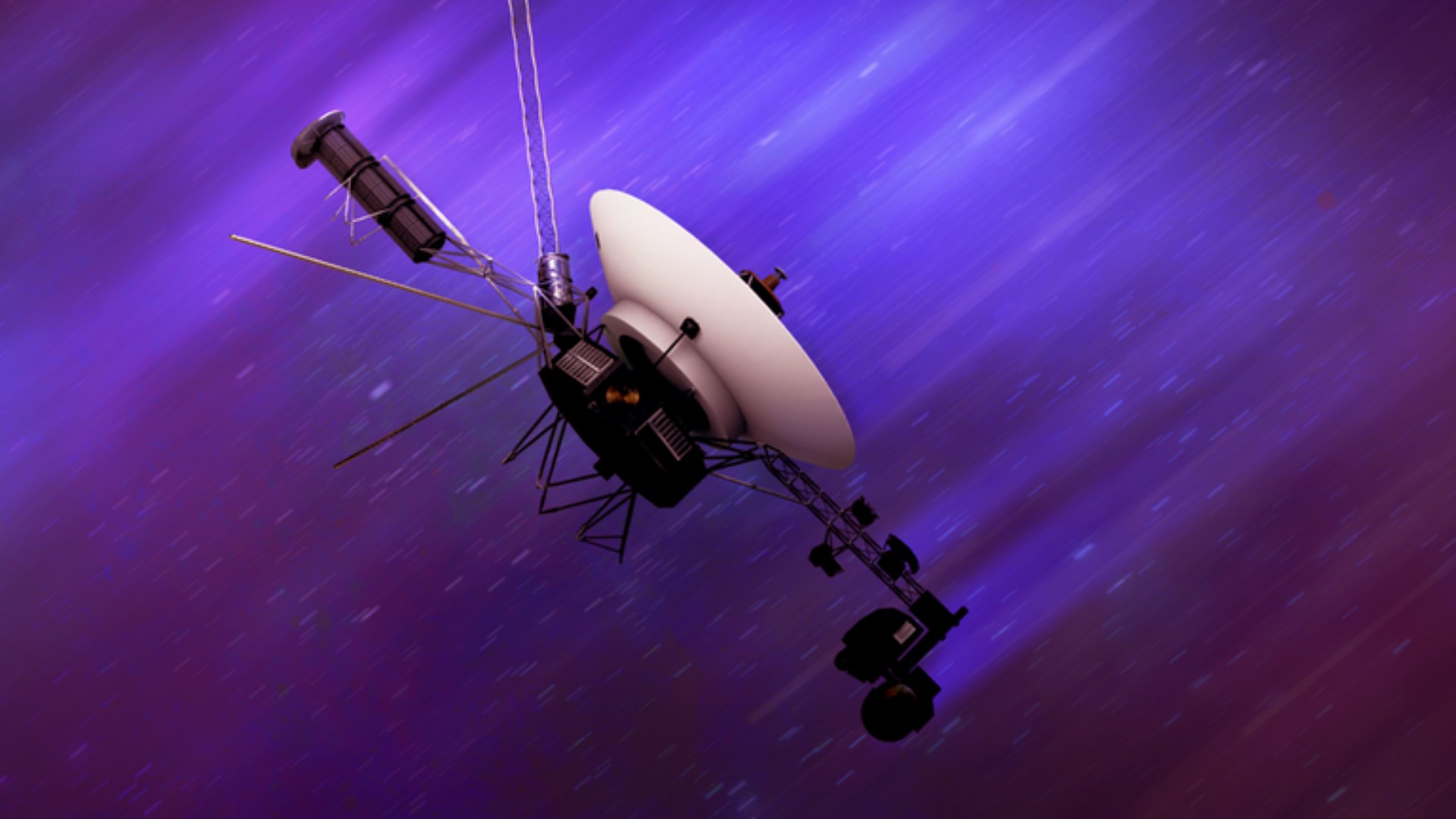
The Voyager 1 spacecraft, originally designed for a five-year mission to observe Jupiter and Saturn, is about to reach a remarkable milestone by hitting a distance of one light-day from Earth. Having spent nearly 50 years traveling through space, NASA has set up a countdown to mark the moment the probe becomes the first human-made object to achieve this distance.
- The spacecraft took nearly 50 years to reach the one light-day marker.
- The milestone is scheduled to be officially reached on November 18, 2026.
- The total distance traveled equals approximately 16 billion miles or 26 billion kilometers.
- NASA engineers have extended the probe's operational lifespan by nearly ten times its original plan.
Understanding the one light-day distance
One light-day is not a measure of time, but rather the distance light travels in a 24-hour period. Since light moves at roughly 300,000 kilometers per second, that equals about 16 billion miles. In comparison, the Moon is only 384,400 kilometers away from Earth, while our planet sits 149.6 million kilometers away from the Sun.
Voyager 1 moves at an estimated speed of 37,844 mph relative to the Sun. However, due to its unprecedented distance, communication latency is massive, taking over 22 hours for a signal to reach the spacecraft and at least 45 hours for a round-trip response, making troubleshooting an extraordinary challenge for mission engineers.
Read alsoNASA successfully extends Voyager 1 lifespan with Big Bang operationTechnical hurdles and power management
Operating at the edge of interstellar space has tested the resilience of both the probe and its engineering team. In 2024, Voyager 1 suffered a critical memory error that specialists successfully resolved after weeks of diagnostics. Earlier this year, an unexpected drop in power levels also forced NASA to execute emergency instrument shutdown procedures.
The three radioisotope thermoelectric generators powering the spacecraft are estimated to retain enough juice to keep Voyager 1 operating into the 2030s. Unless a major catastrophic failure occurs, the probe will continue transmitting valuable telemetry and scientific data back to Earth.
Future trajectory and celestial heading
As Voyager 1 continues its lonely voyage, its heading is directed toward a star known as AC +79 3888 or Gliese 445 in the Ursa Minor constellation. While the spacecraft is expected to pass within 1.7 light-years of the star, its modest speed means it will take hundreds of thousands of years to complete the next leg of its journey.
Source: Latest from Tom's Hardware