Hundreds of Artex AI hacking tools found publicly exposed to the web
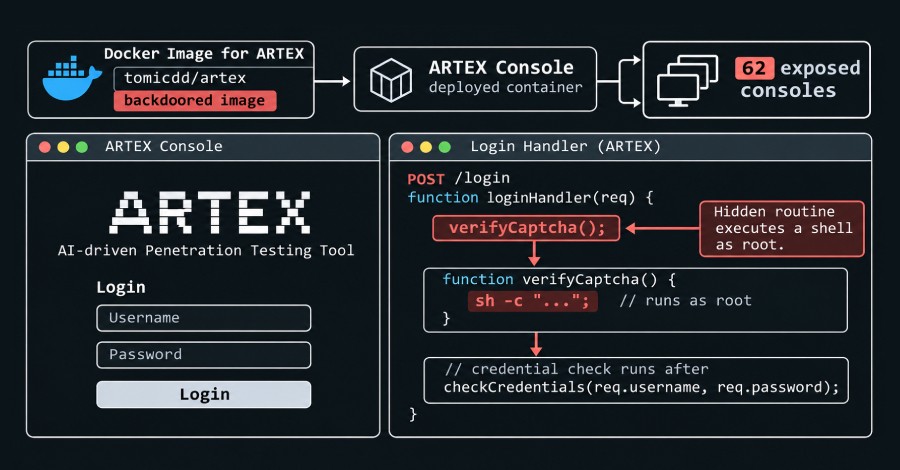
Cybersecurity researchers discovered over 800 servers hosting the Artex hacking tool exposed online without password protection, posing major risks.
·1 min read

Cybersecurity researchers have identified hundreds of instances of the autonomous penetration testing tool Artex exposed to the public internet. These servers, which require no authentication, are being used by threat actors to carry out cyberattacks, highlighting a significant failure in basic server configuration.
- Censys researchers located over 800 distinct Artex deployments accessible via the web.
- The tool uses AI agents to automate the attack lifecycle from reconnaissance to exfiltration.
- Artex has been linked to major breaches, including the ConnectWise and Korean banking attacks.
- Despite the move to a closed-source model, existing copies remain a persistent threat.
The capabilities of Artex Artex is an open-source, AI-driven tool designed to probe computer systems for vulnerabilities. Microsoft has documented how these AI agents perform attacks with minimal human oversight, allowing hackers to move through target networks at unprecedented speeds. Because the software is powerful yet freely available, it has become a staple for attackers lacking access to more elite, proprietary security models.
Risks of misconfiguration Even the most advanced tools are ineffective if they are insecurely deployed. Censys noted that these hundreds of systems were exposed without a password, often due to poor administrative oversight. This oversight not only aids attackers in their initial access but also allows for the persistence of implants, which maintain hidden control over compromised networks.
What this means for cybersecurity The proliferation of Artex shows that simple vulnerabilities, such as weak passwords or exposed ports, remain the primary entry point for large-scale attacks. Organizations must prioritize hardening their infrastructure and ensuring that any penetration testing tools are strictly isolated. With the project now moving to a paid, closed-source model, threat actors may shift focus, but the currently exposed legacy deployments remain a critical concern for defenders worldwide.
Source: TechCrunch