PsiQuantum turns silicon photonics into an optical switch for AI data centers
Quantum computing firm PsiQuantum has developed a low-loss silicon photonics optical switch to supercharge AI data center GPU networks with minimal signal loss.
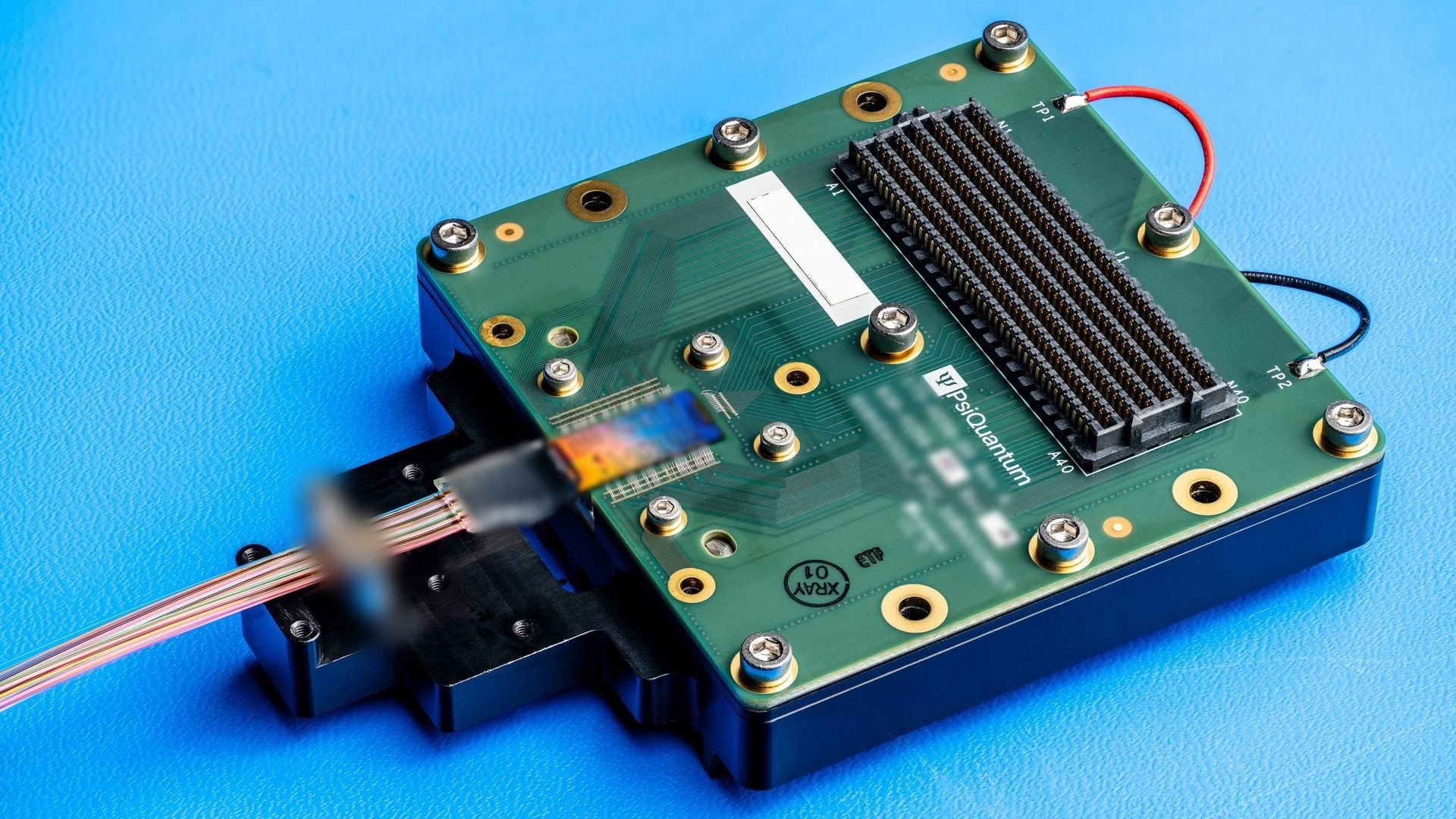
Quantum computing company PsiQuantum announced it has adapted its low-loss silicon photonics technology into an optical switch designed specifically for AI data centers. The development aims to overcome communication bottlenecks as data transfers between GPUs scale up rapidly in modern clusters.
- PsiQuantum's eight-port optical switch achieves a remarkably low signal loss of just 1.2 dB in lab tests.
- The all-optical circuit switch passes light straight through from fiber to fiber without electrical conversions.
- The prototype operates without amplifiers and targets standard O-band wavelengths used by standard optical modules.
How the Optical Circuit Switch Works
Traditional data center switches convert light to electrical signals at every hop, consuming power and adding latency. An optical circuit switch (OCS) instead maintains a fixed light path until a change is ordered. Unlike mirror-based systems from Google or Lumentum, PsiQuantum's switch uses circuits etched directly onto a silicon chip with no moving parts.
As AI clusters grow, moving data efficiently between GPUs is essential. Copper cabling has strict reach limitations, making optics the preferred high-bandwidth alternative. While typical data centers tolerate up to 3 dB of light loss, PsiQuantum's prototype achieves a mere 1.2 dB insertion loss, keeping performance well within acceptable operational thresholds.
Read alsoBoom Supersonic faces delays for Overture and loss of data center dealPerformance and Competitive Comparison
The new 8x8 prototype features eight inputs and eight outputs, ensuring every input can reach every output in a strictly non-blocking manner. It boasts a reconfiguration time of under 3 milliseconds and crosstalk of 40 dB, meaning less than 0.01 percent of light leaks to other ports.
While competitors offer larger port counts—such as Salience Labs with 32 ports and Lumentum with up to 300 ports—PsiQuantum has already taped out a 64x64 version and has a 72x72 device underway. Other firms like Salience and iPronics also achieve losses under 2 dB, but frequently rely on built-in optical amplification, whereas PsiQuantum's passive design stems directly from its quantum computing research.
Future Outlook and Infrastructure Impact
PsiQuantum's deep expertise in minimizing light loss comes from its quantum computer development, where waveguides and splitters must operate with extreme efficiency. Although the current 8x8 prototype is built for conventional traffic and requested proposals from Nvidia, future iterations may incorporate barium titanate (BTO) materials for gigahertz-speed switching. Expanding into AI infrastructure allows PsiQuantum to scale its packaging and manufacturing supply chain for next-generation computing.
Source: Latest from Tom's Hardware